Nice nurse needed. Should be young and pretty…
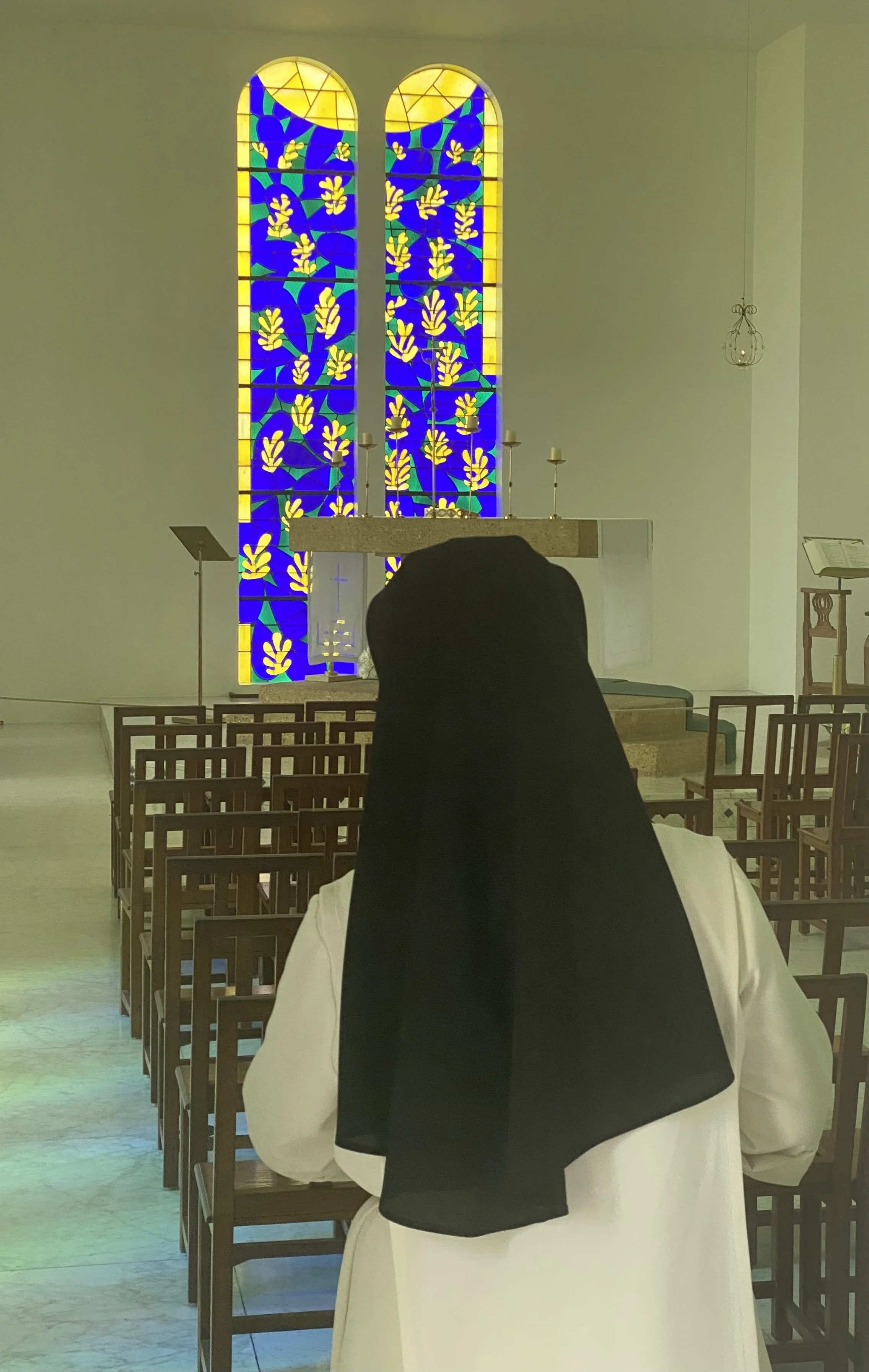
Vence - The Matisse Chapel
A visit to Henri Matisse’s masterpiece is one-of-a-kind. This chapel, dedicated to the Dominican order, was built from 1949 to 1951. Everything here was designed by Henri Matisse, who considered it his masterpiece.
In the 1940s, while living in Nice, Henri Matisse developed cancer, and after some major surgery, it took him quite a long time to recover. In 1942, he placed an ad with the local nursing school: “Nice nurse needed. Should be young and pretty”.
Monique Bourgeois, 21, sole breadwinner in her family, applied for the job, and was hired. She took care of him daily, and even posed for him several times. Monique then entered the Dominican convent / nursing home in Vence, to recover from tuberculosis, and decided to stay there, becoming Sister Jacques-Marie in 1944.
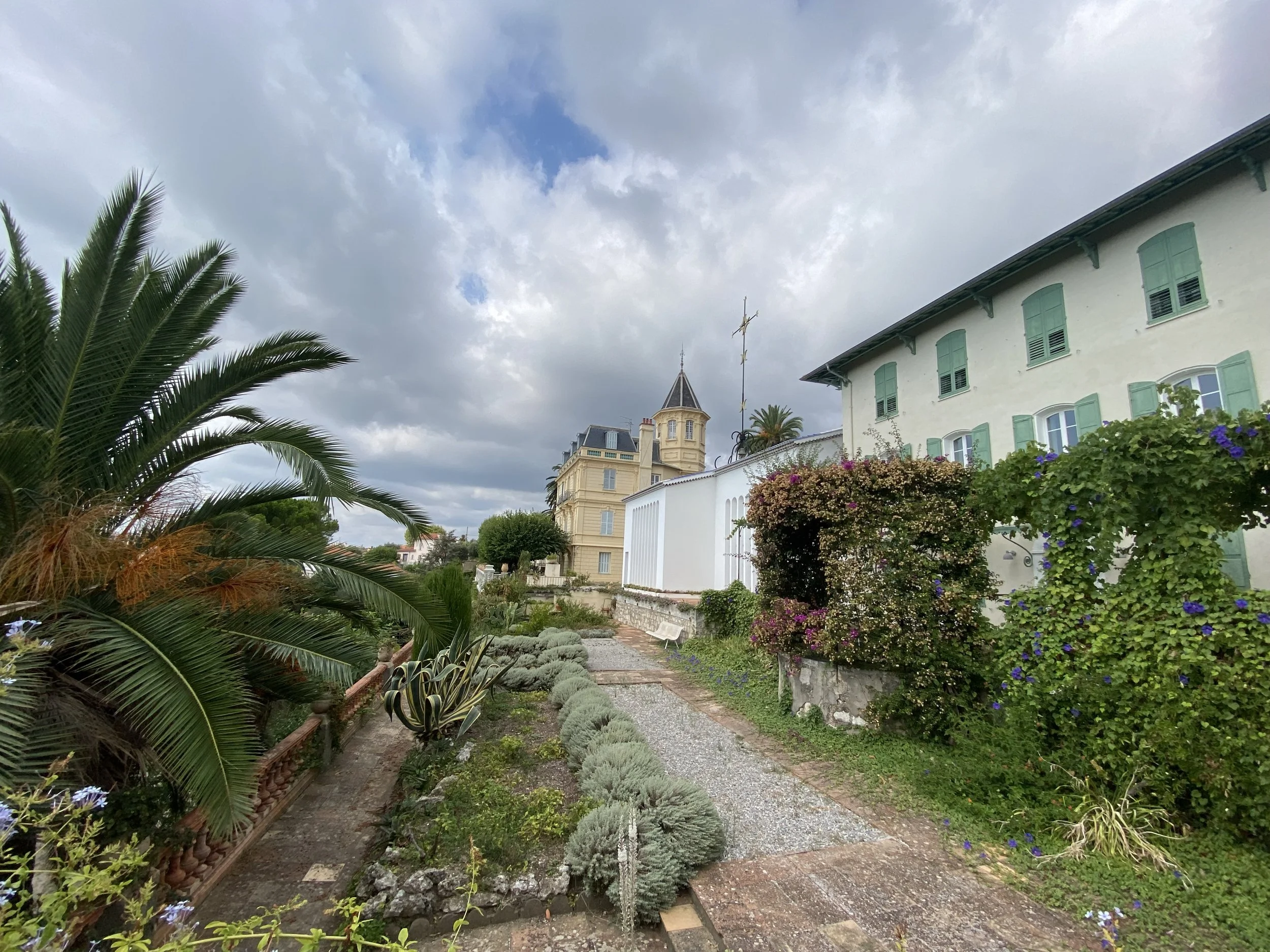
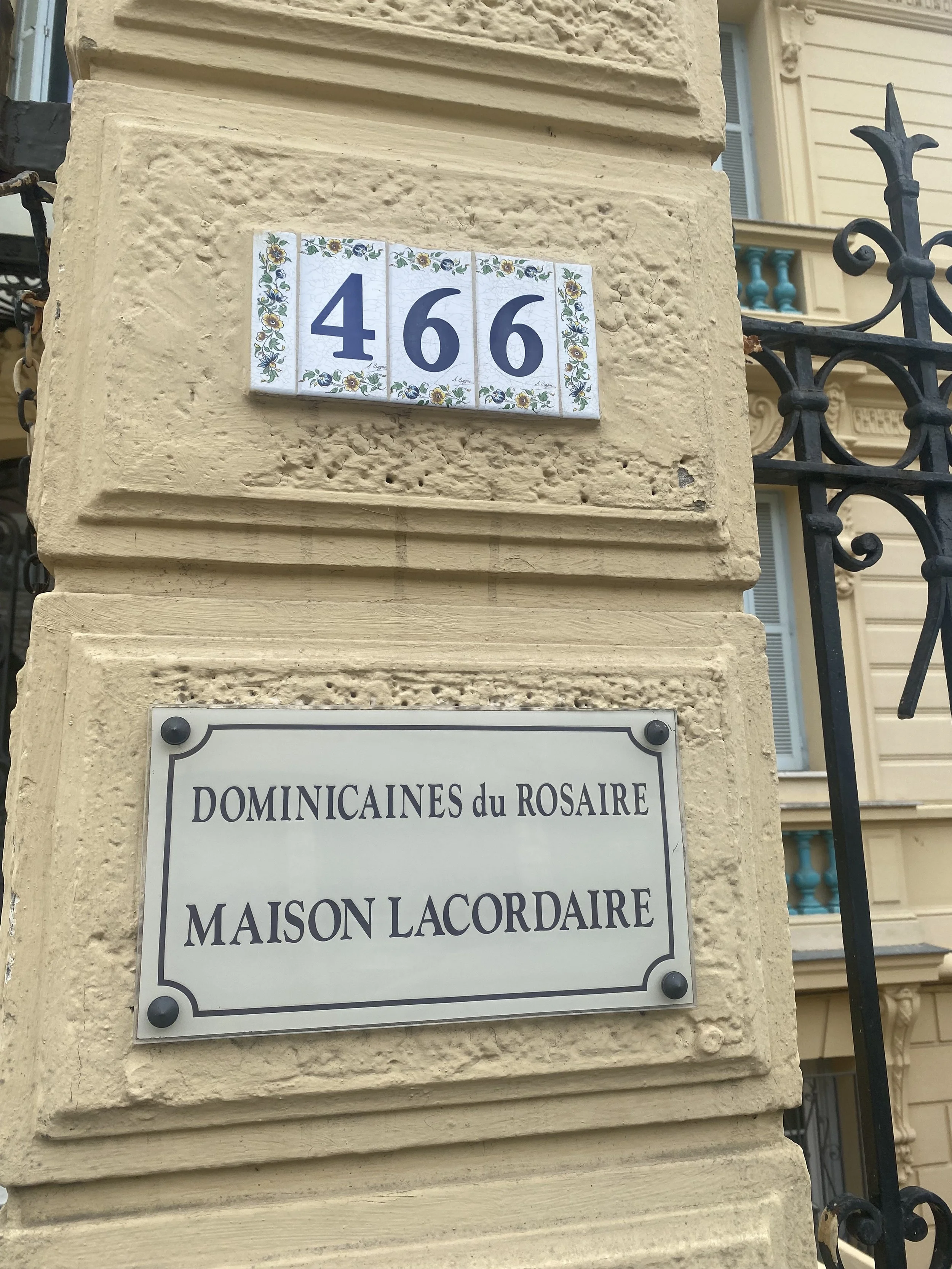
Here are a few photos of the Dominican sisters’ nursing home near the chapel, one of the most significant Belle Époque villas in Vence. Henri-Dominique Lacordaire was a renowned pulpit orator who re-established the Dominican Order in France after the French Revolution, a priest but also journalist, theologian and political activist.
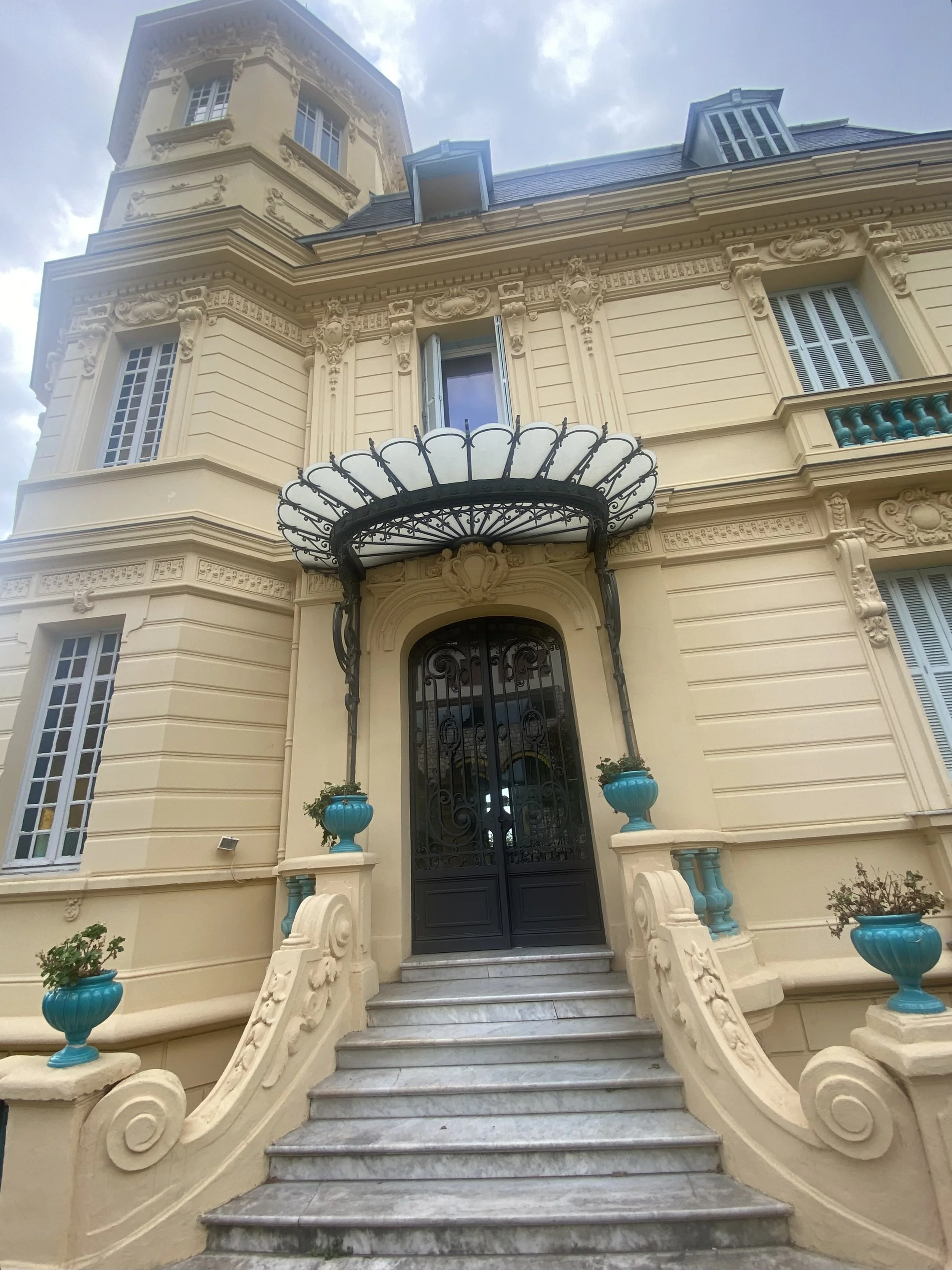
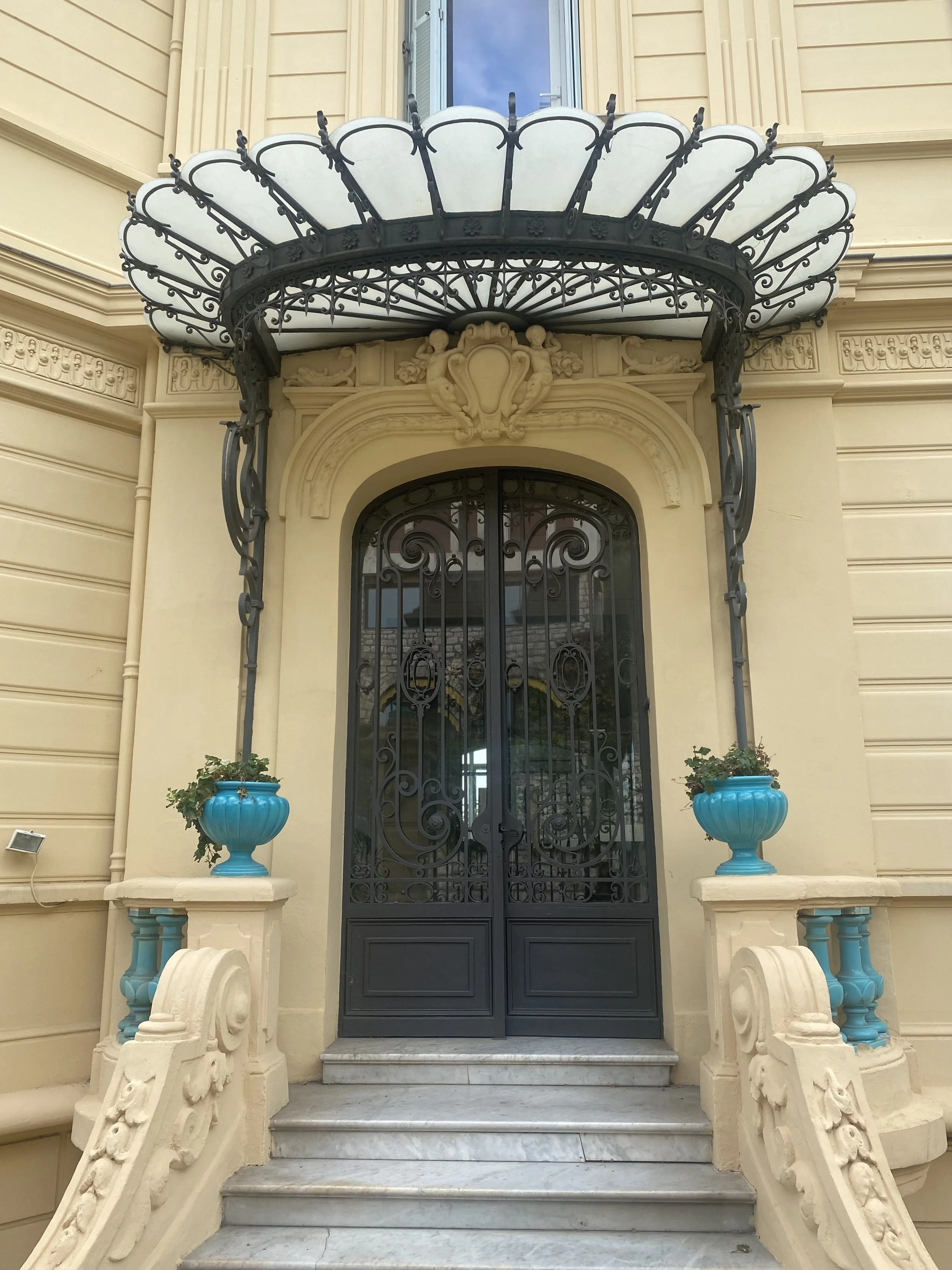
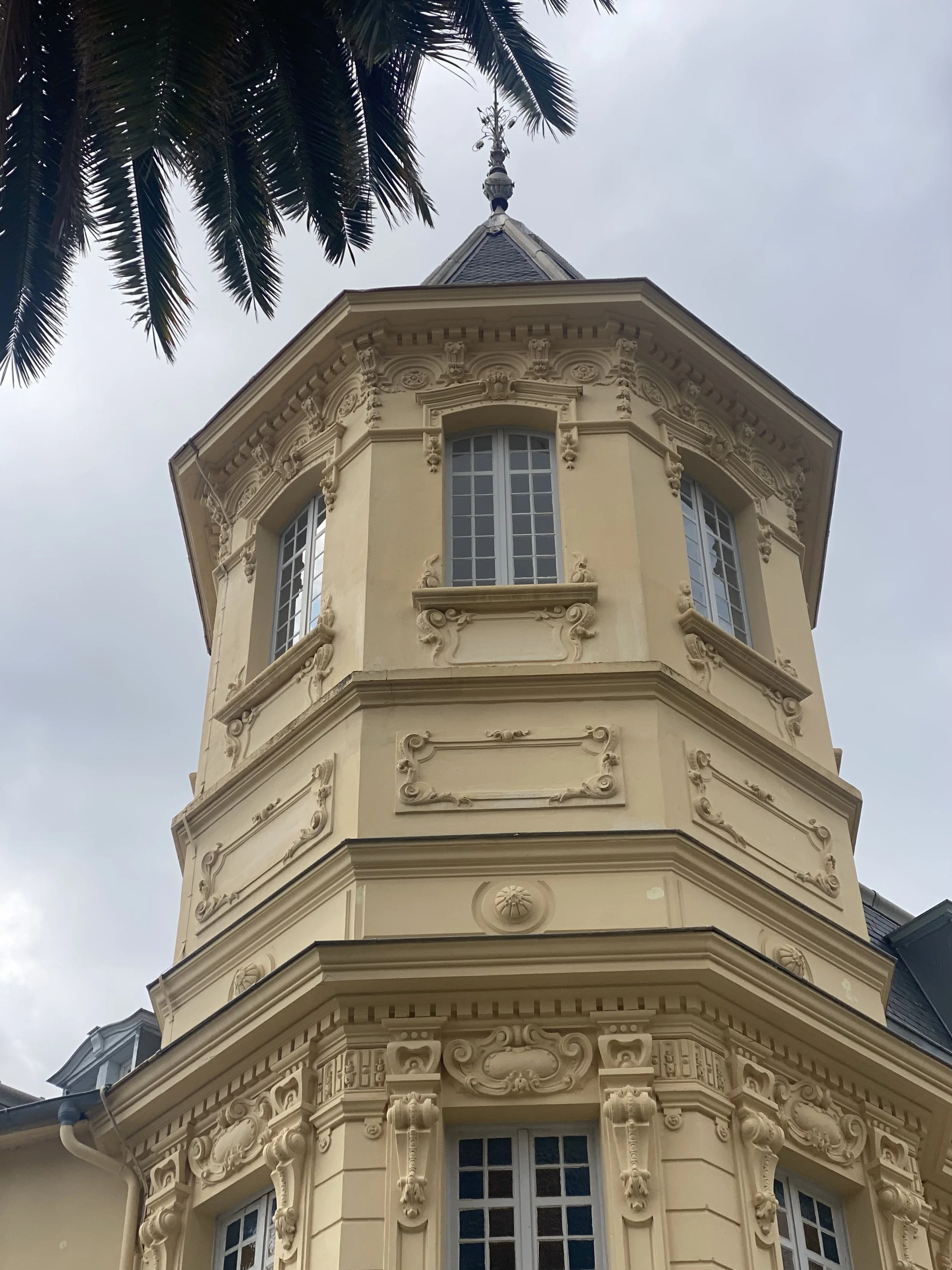
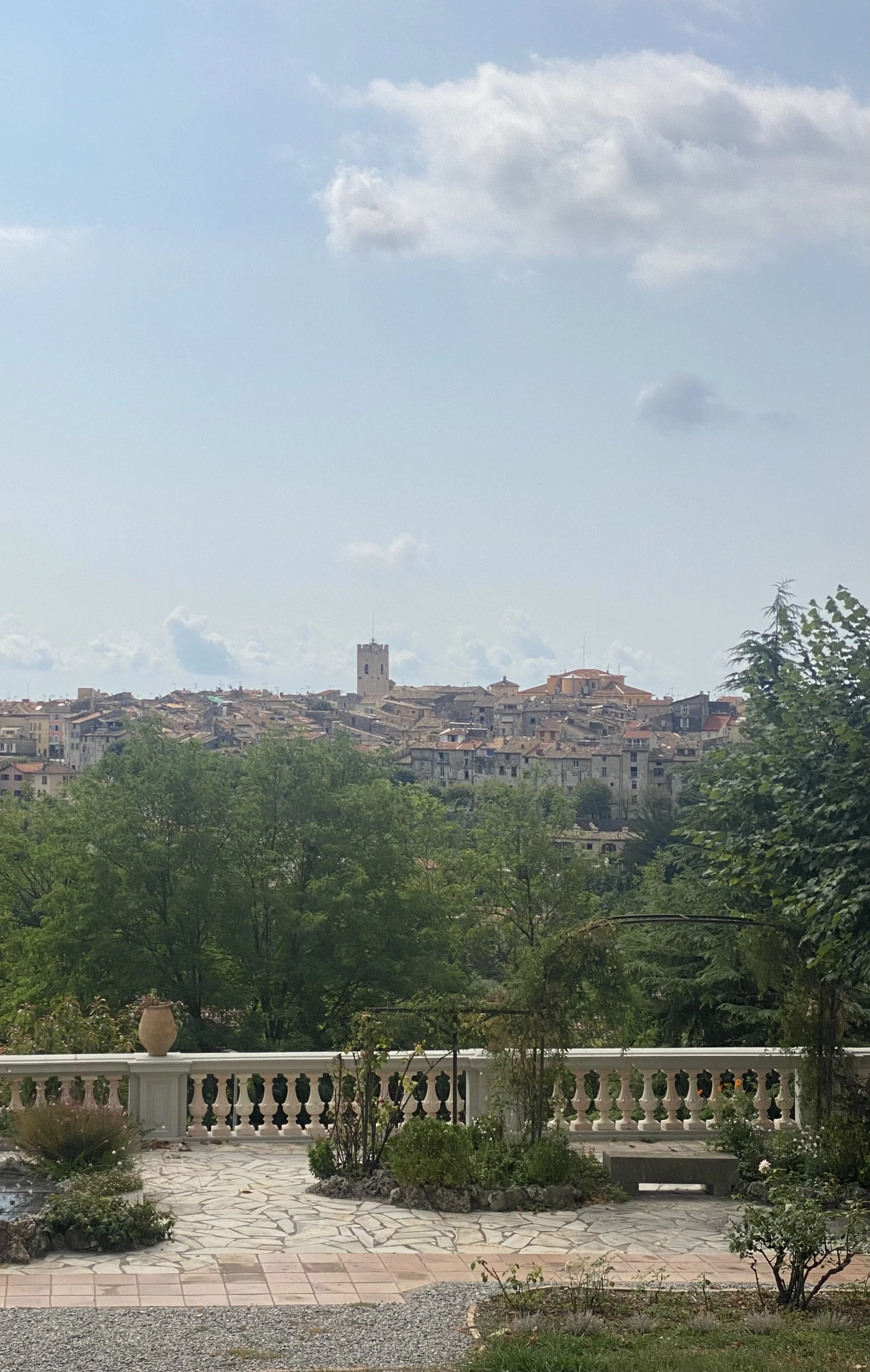
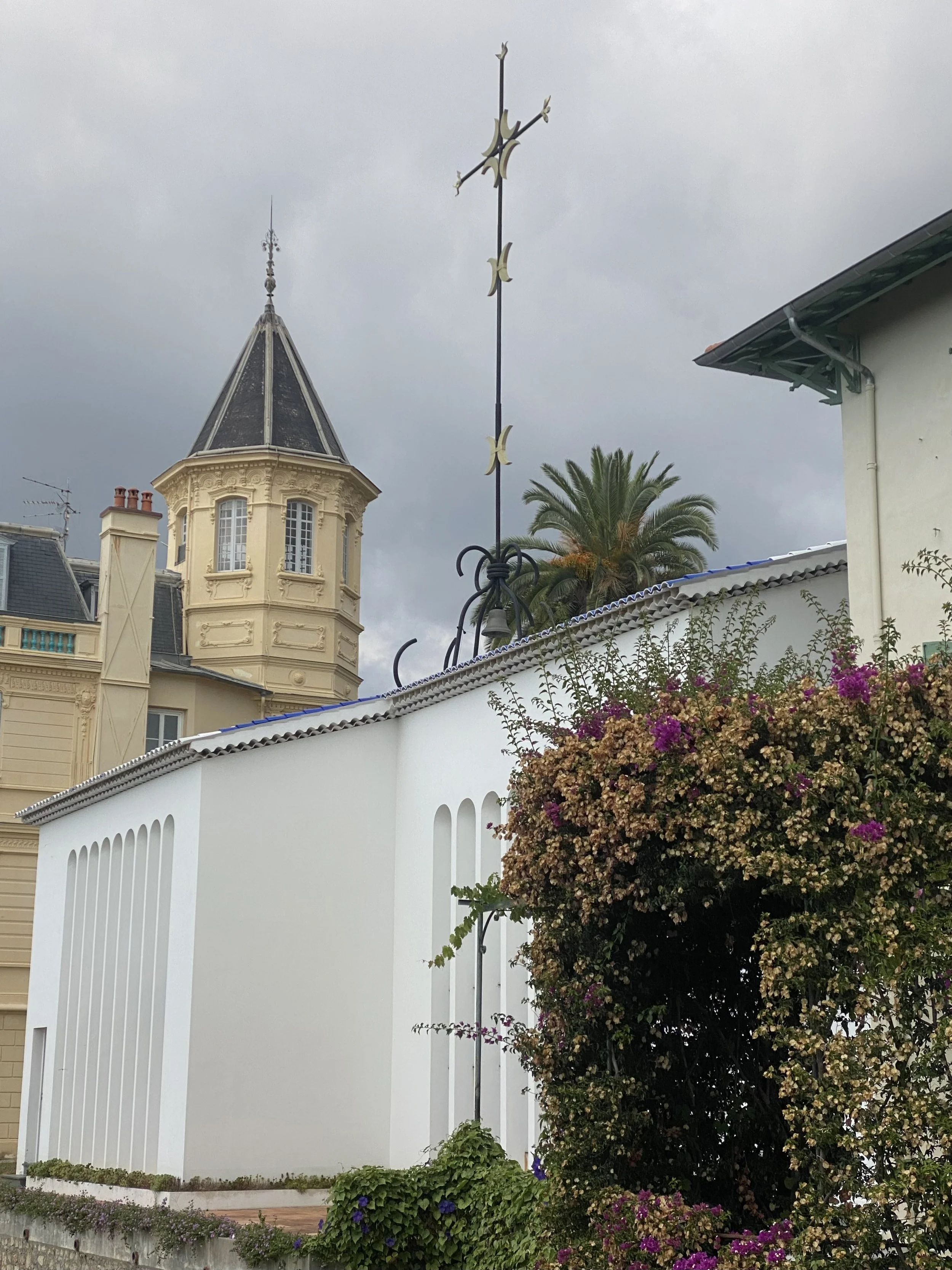
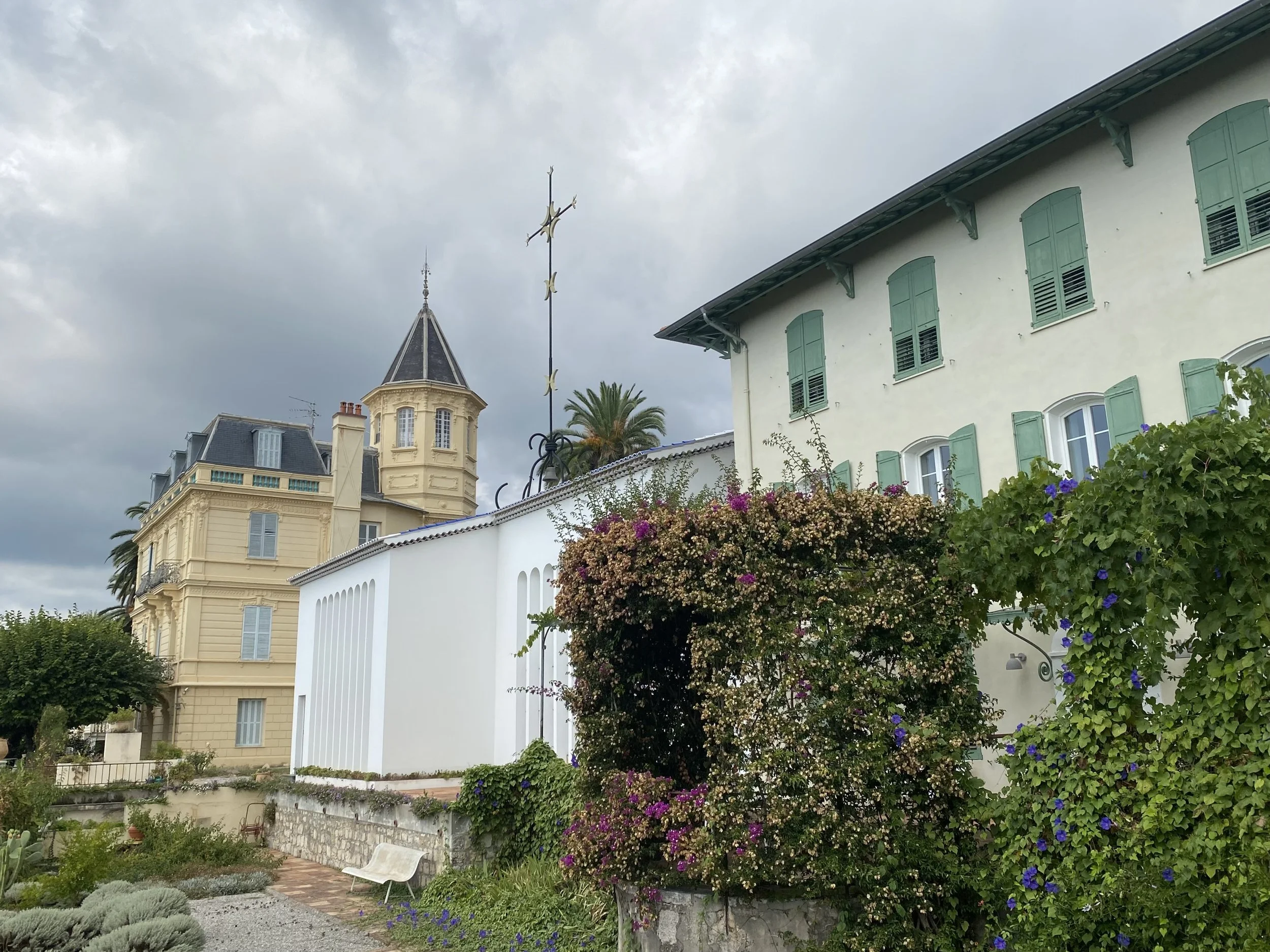
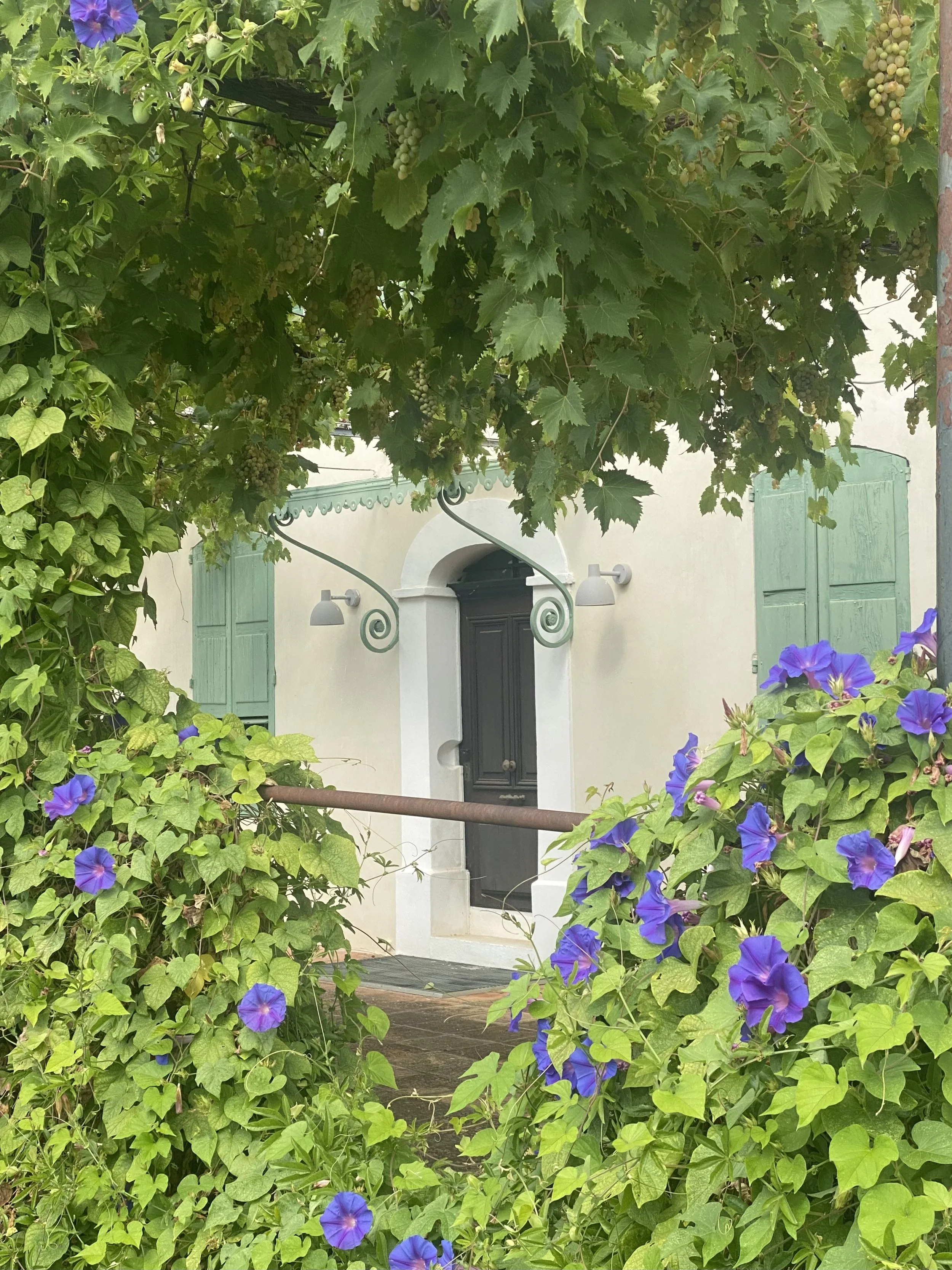
In 1943, Matisse bought a villa close to the convent in Vence to escape the threat of coastal bombing in Nice. The villa Le Rêve (the dream) still exists today. Convalescing Monique asked Matisse if he could help design a chapel next to the girls’ school (above photo) that the nuns were managing in a Dominican congregation, a stone’s throw from the painter’s villa. Brother Louis-Bertrand Rayssiguier, who had a passion for contemporary art, and Father Couturier convinced him, and he accepted.
He was 77 when he started working on his most ambitious project (1947) and it took him 4 years to create everything, living in his studio amongst the cut-out maquettes and preparatory drawings: the architecture (he had never designed a building before), interior ceramics, floor, lighting, stained-glass windows, altar, cross, …even the priests’ vestments.
The illness had diminished him and he had to wear an orthopedic corset and as he could not stand for a long time, he needed a wheelchair.
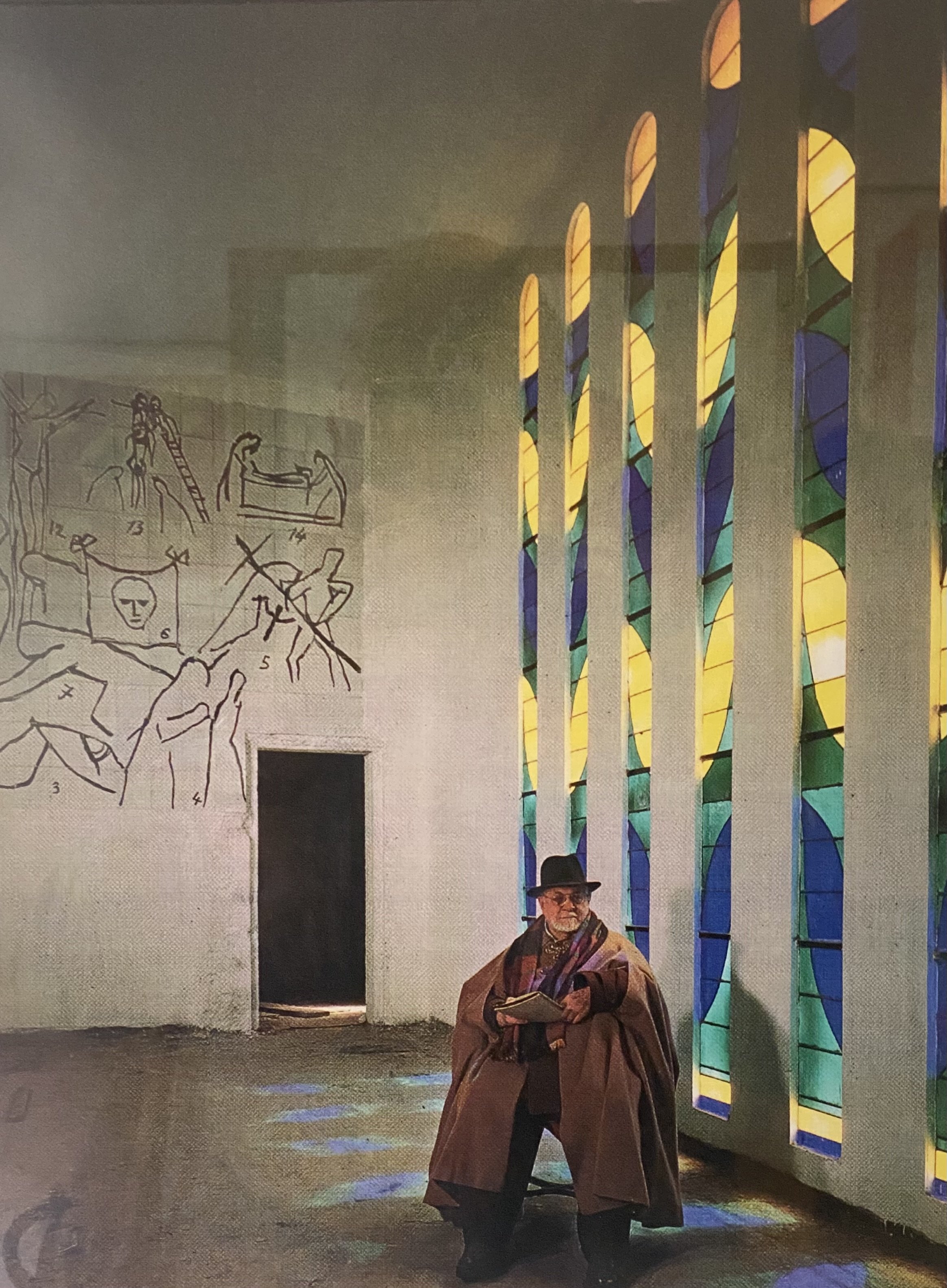
Matisse was too tired to attend the inauguration, but his letter was read: “This work has taken me four years of exclusive and diligent work, and it is the result of my entire working life. Despite all its imperfections I consider it to be my masterpiece”.
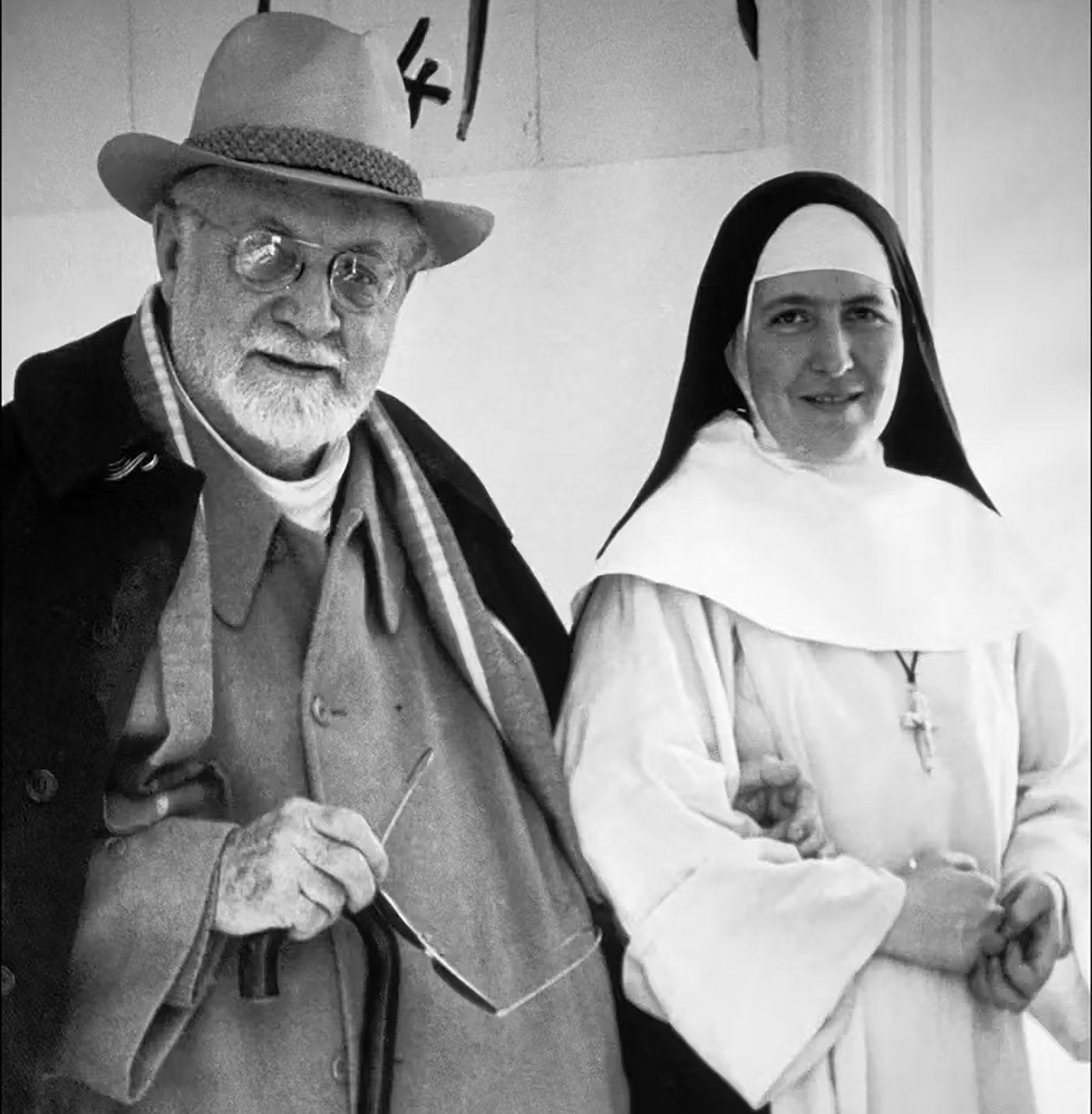
When Matisse died in 1954, Monique was not welcome at his funeral because of rumors of a possible romance between the artist and the nun. Sister Jacques-Marie died in 2004 at the age of 84.
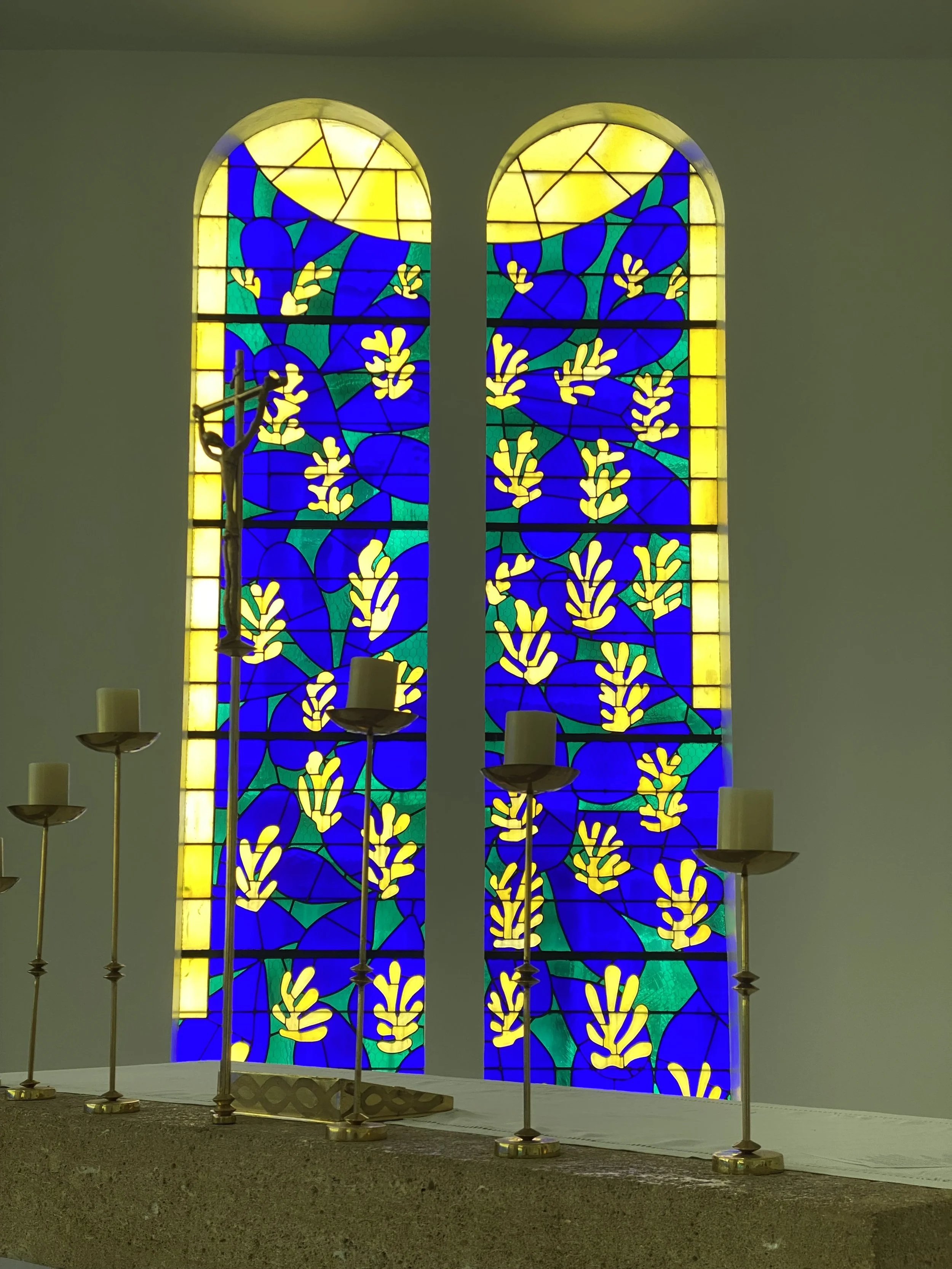
Inside the chapel, the brown stone altar resembles the color of bread. The bronze crucifix and candle holders were made by local craftsmen.
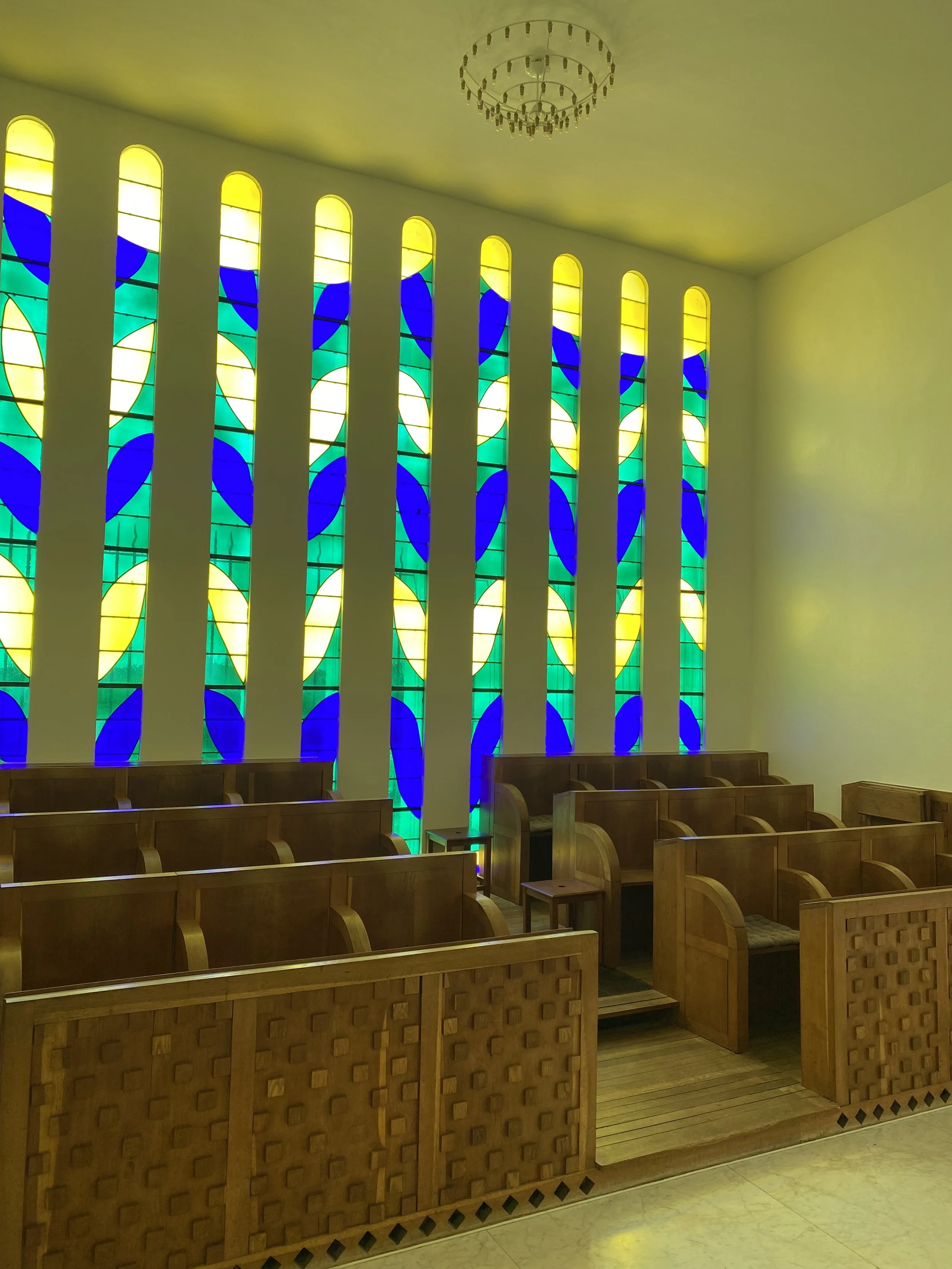
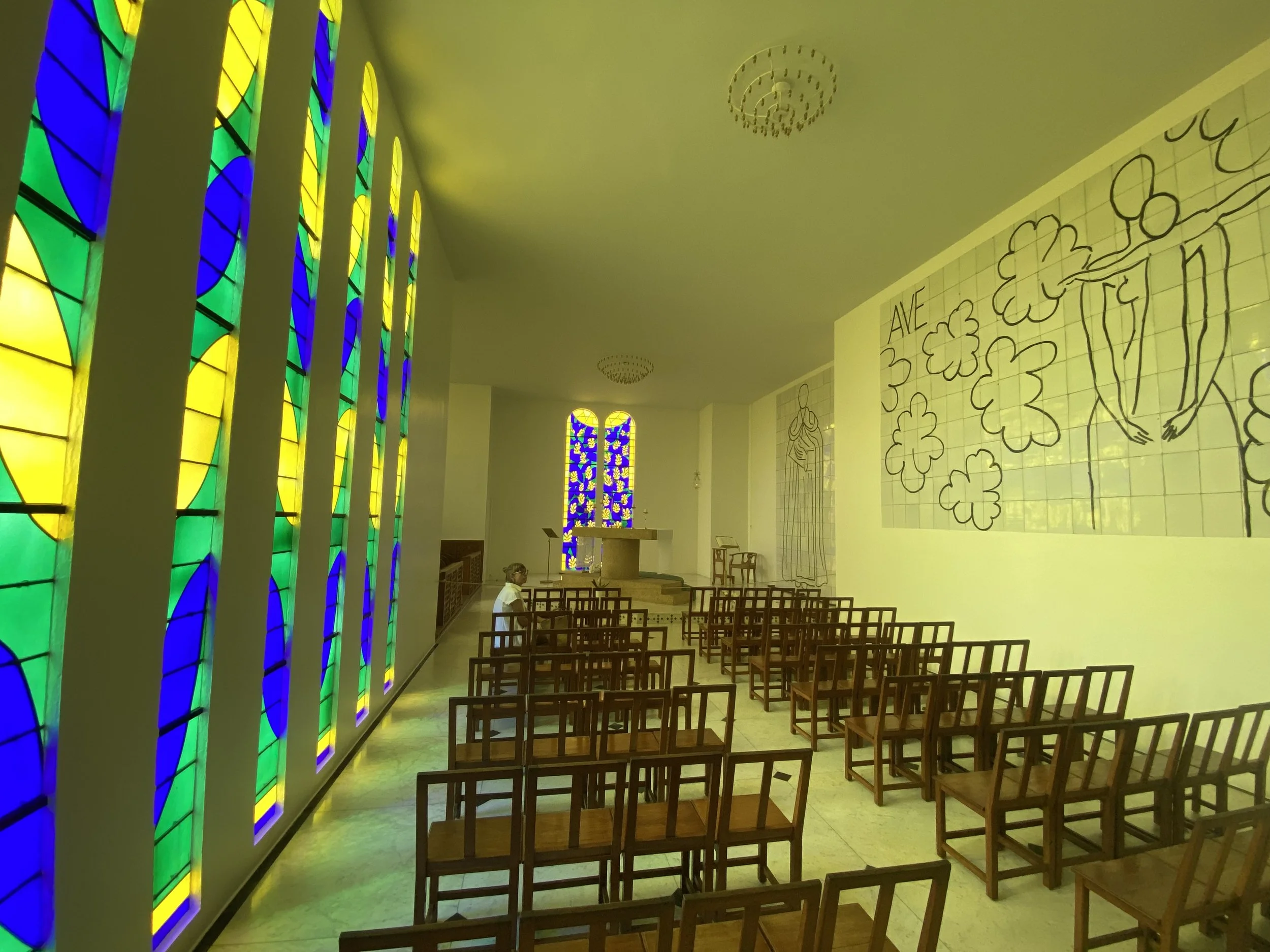
There are only three colors for the stained-glass windows, which took a long time to create: yellow for the sun, green for the vegetation and blue for the sky and Mediterranean Sea.
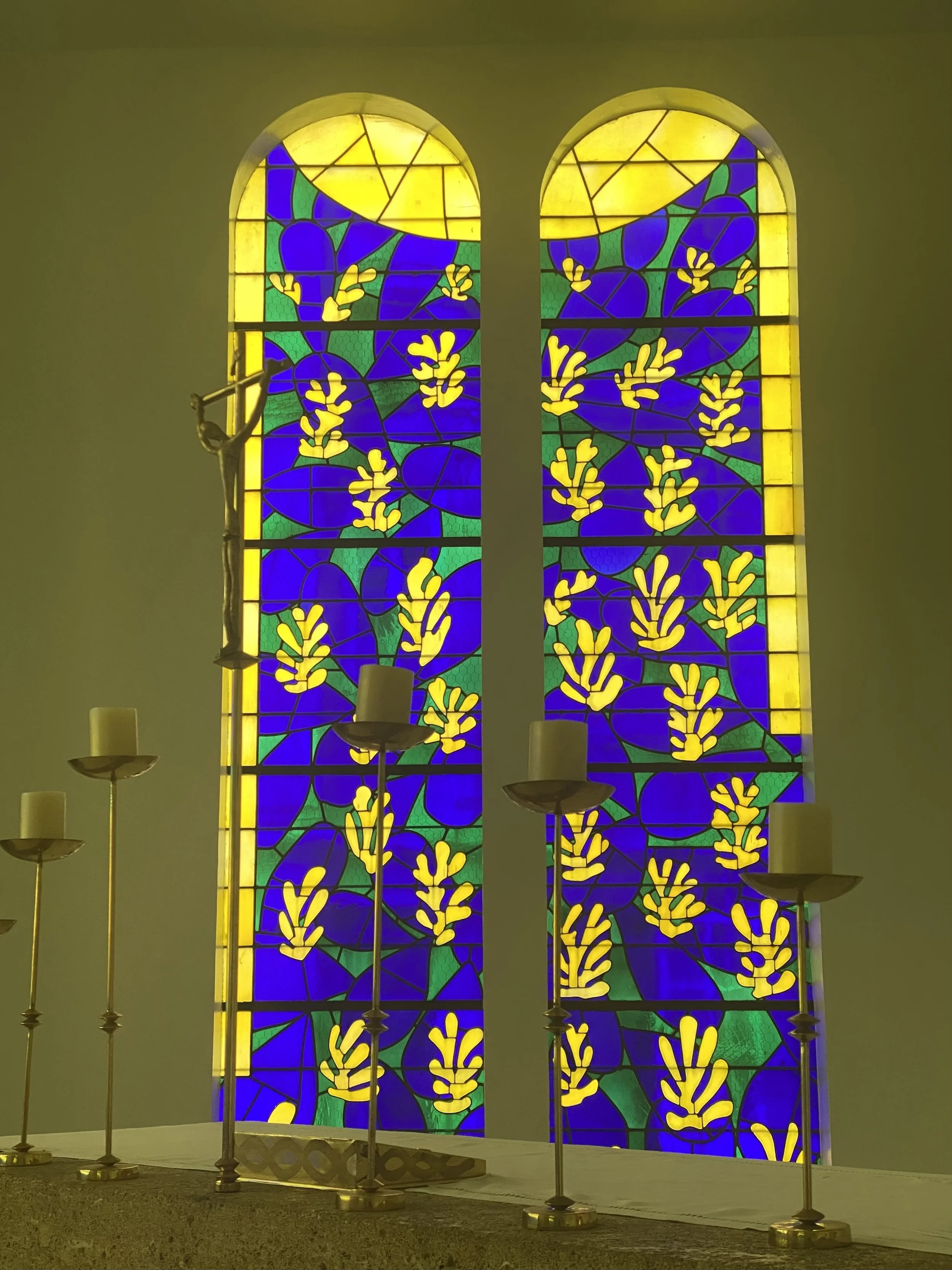
The two windows beside the altar represent the Tree of Life. When the light comes through the stained-glass windows, the colors dance on the white marble floor.
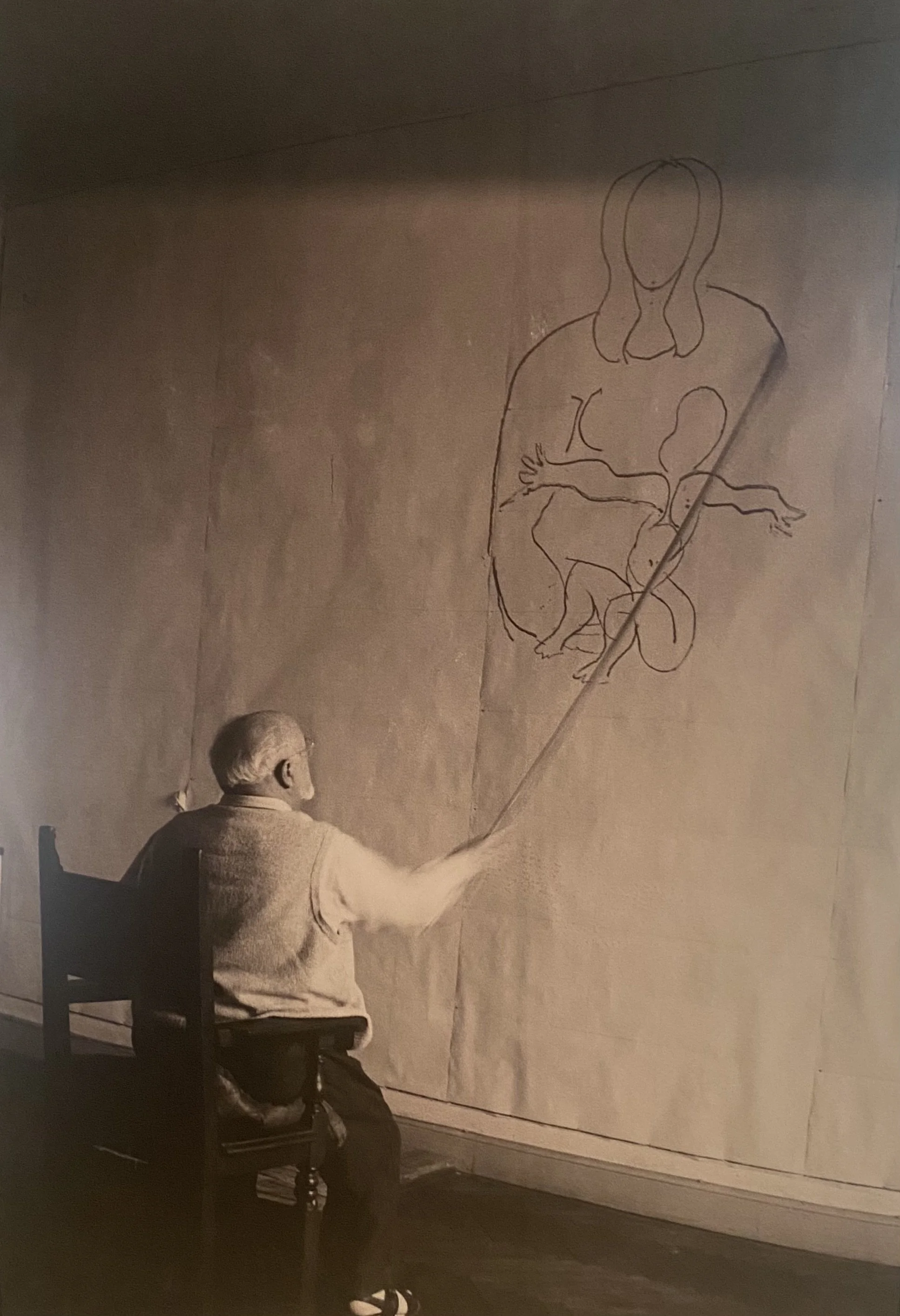
For the 3 murals Matisse, wheelchair bound, used a brush attached to a long stick to draw on paper fixed to the walls. His simple but powerful drawings were then transferred on white tiles with black paint and the tiles were fired by local ceramic artists.
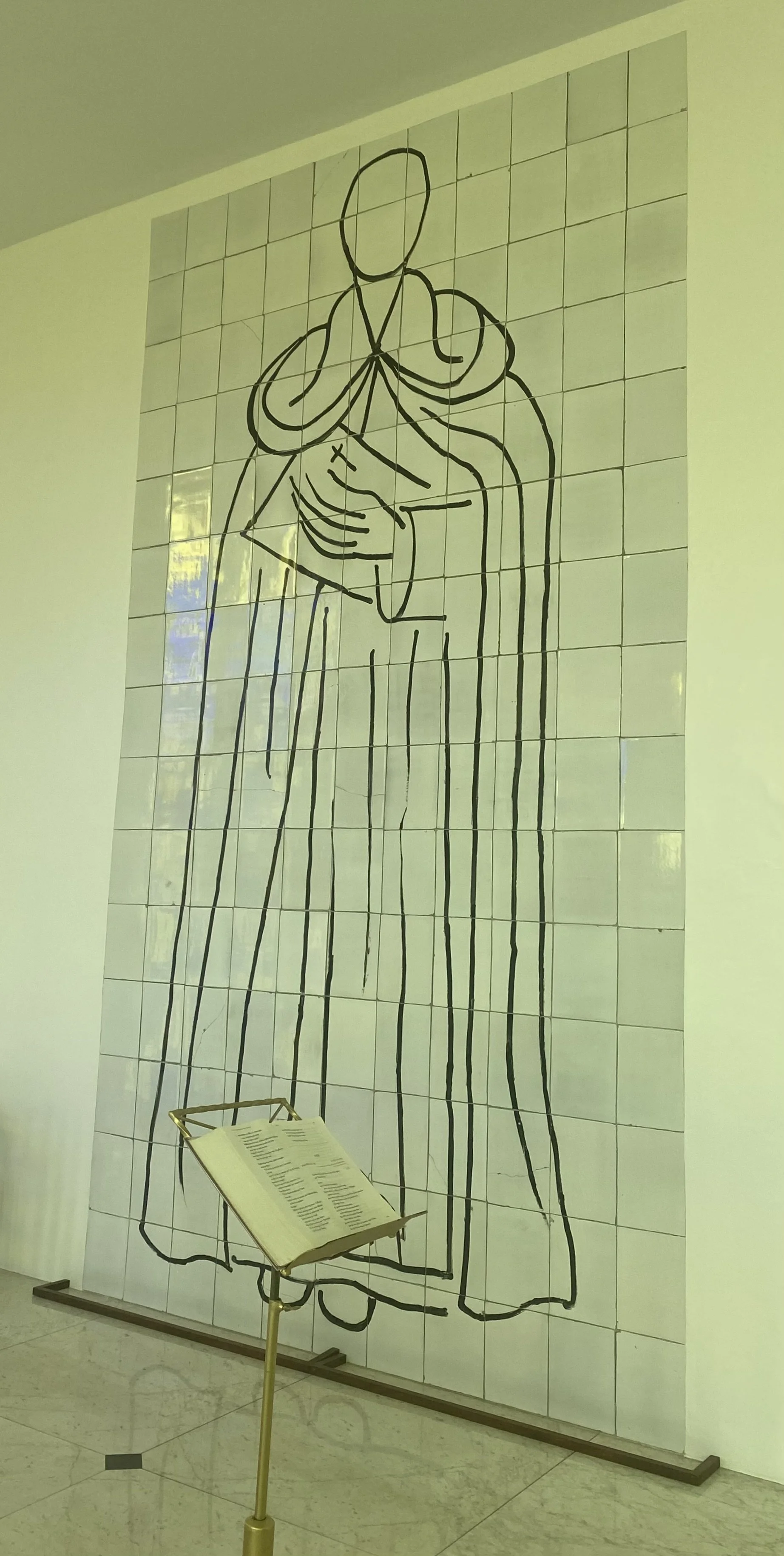
St. Dominic, who lived in Spain in the 13th C, founder of the order of preachers. He is known for introducing the practice of the rosary among Catholics, hence the name: Chapelle du Rosaire.
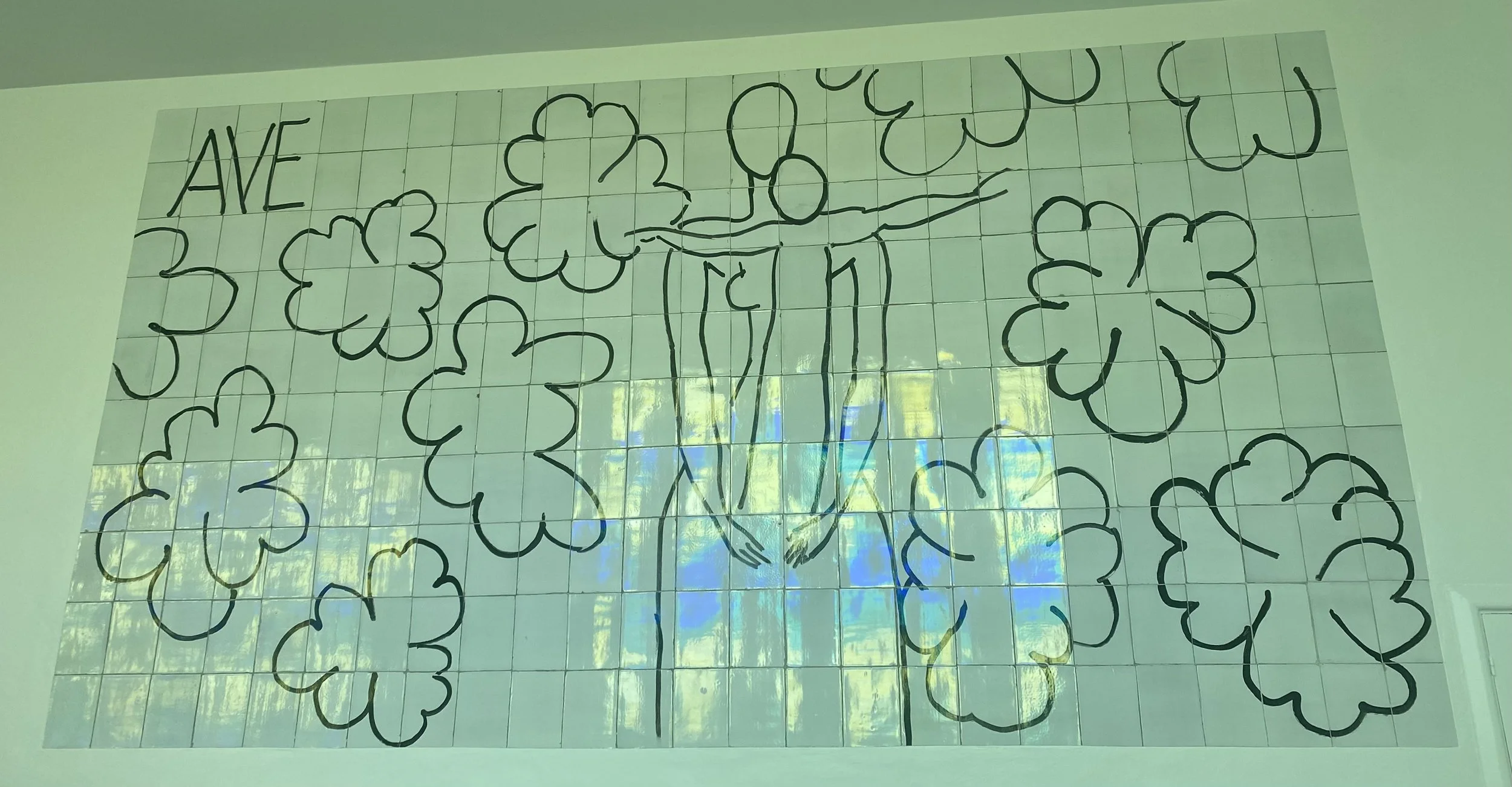
Mary, offering her child to the world, is surrounded by abstract flowers.
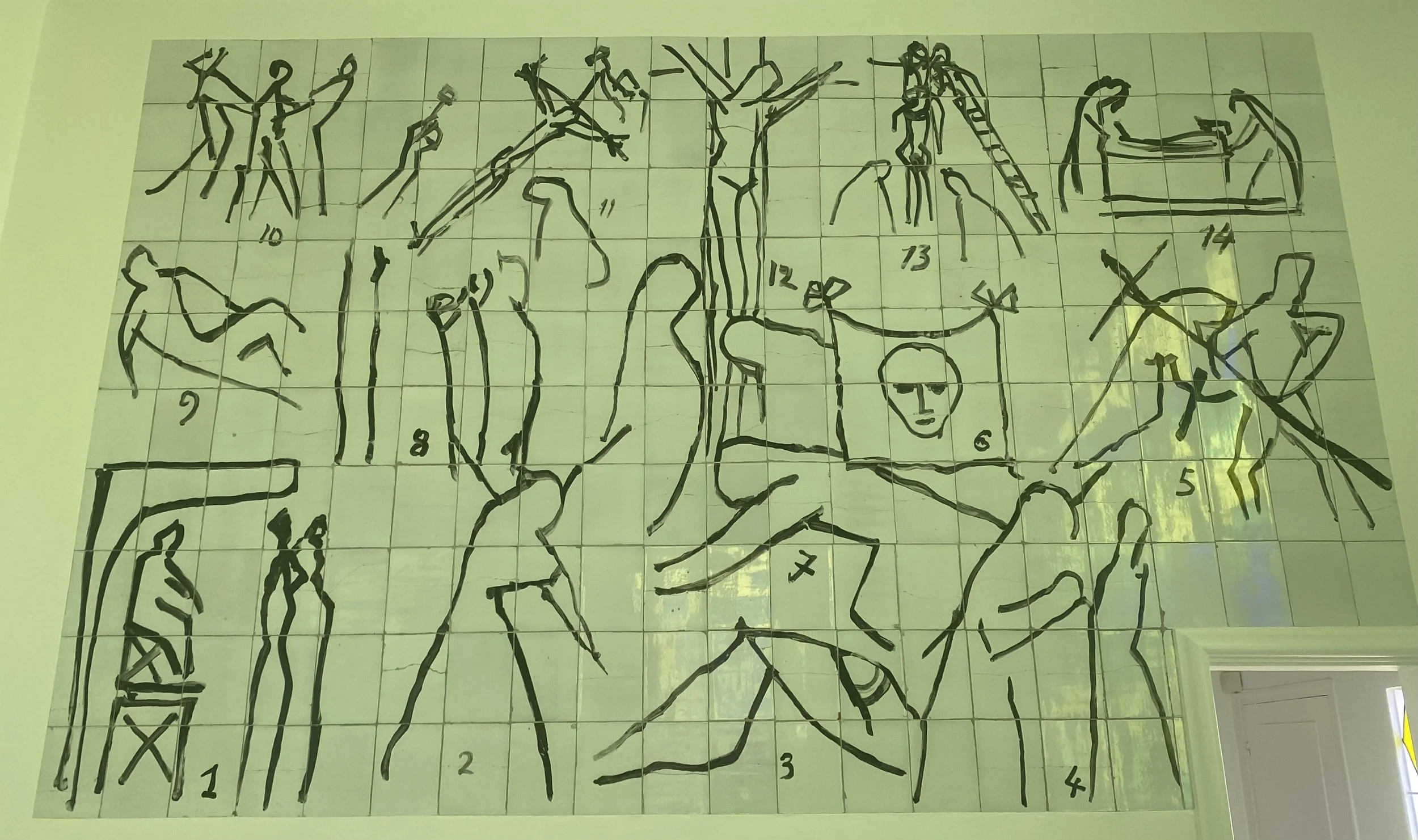
The 14 Stations of the Cross are all depicted in one composition. Usually they are separated. Matisse decided to gather all stations on one panel, instead of spreading them on the walls of the chapel.
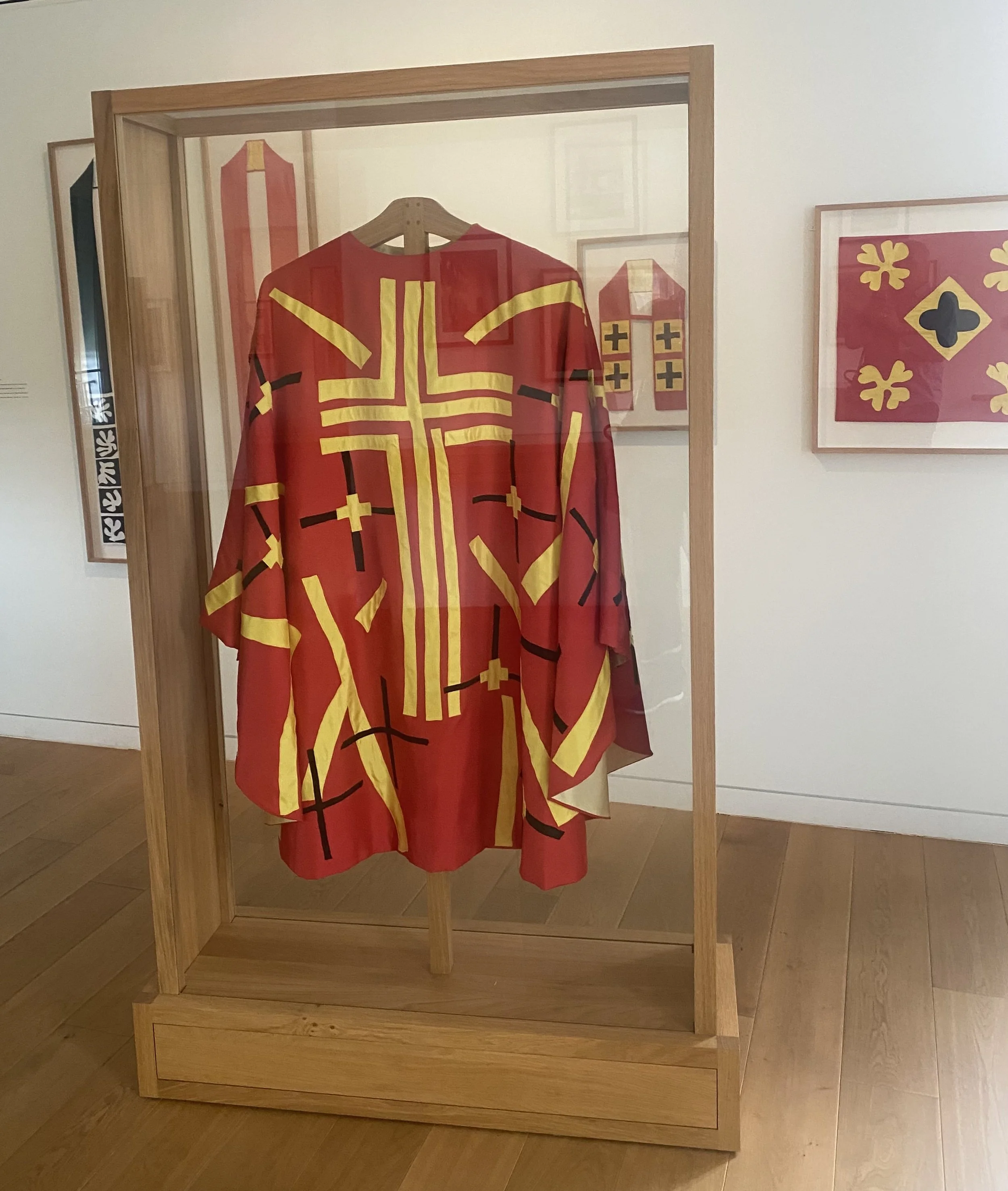
To design the priests’ vestments, Matisse used cut paper, which were then translated into silk. Today, when the priests, who wear these vestments, move through the space, it is Matisse’s cut papers that are activating it!

The roof tiles are white and blue, in a zigzag pattern.
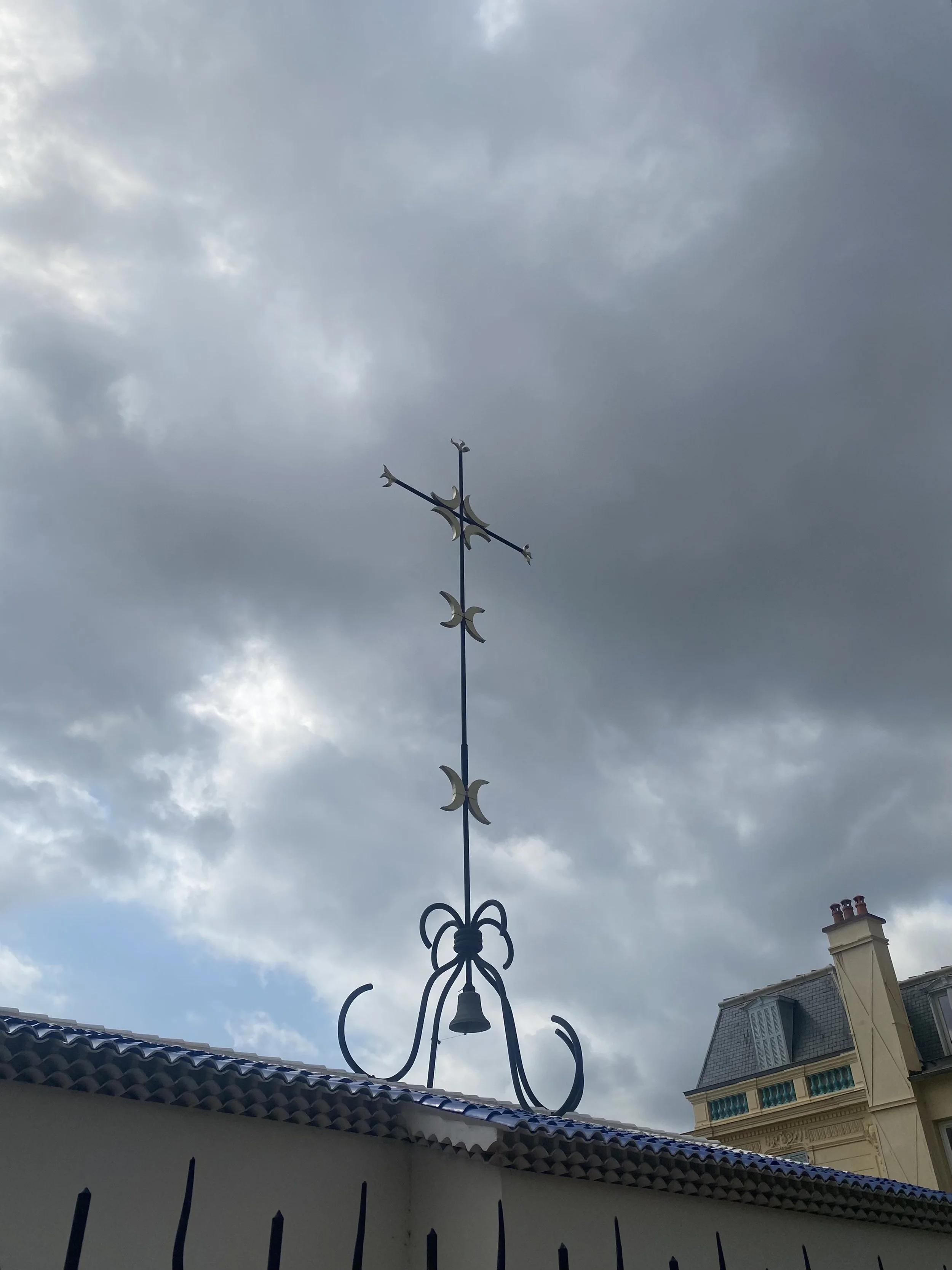
The beautiful 13m-high wrought-iron cross bears crescent moons and gilded flames.
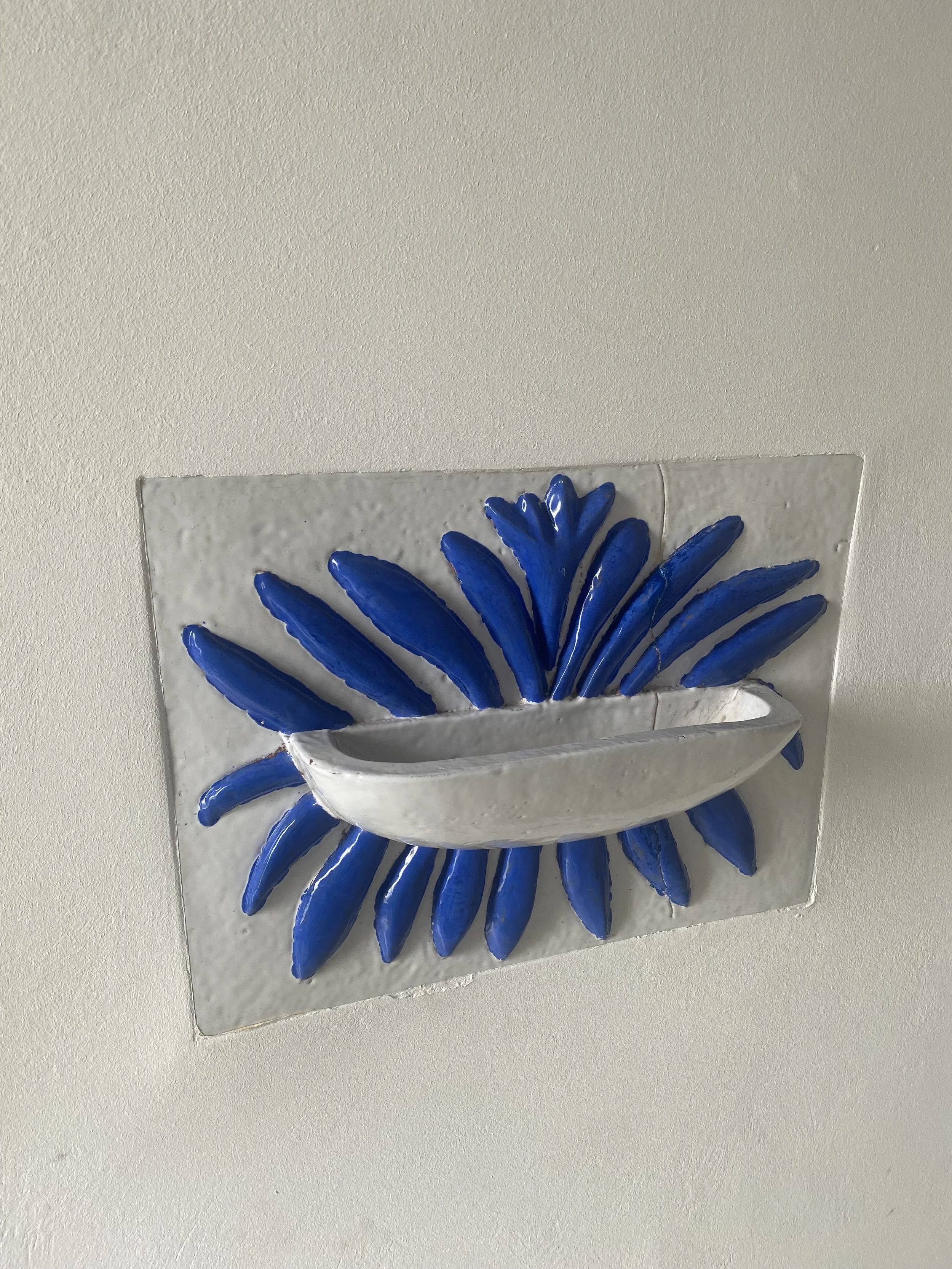
Matisse’s holy water font.
A miraculous work of art. Matisse wrote: “I hope that everyone who enters my chapel will feel purified and that their burdens will be relieved”.
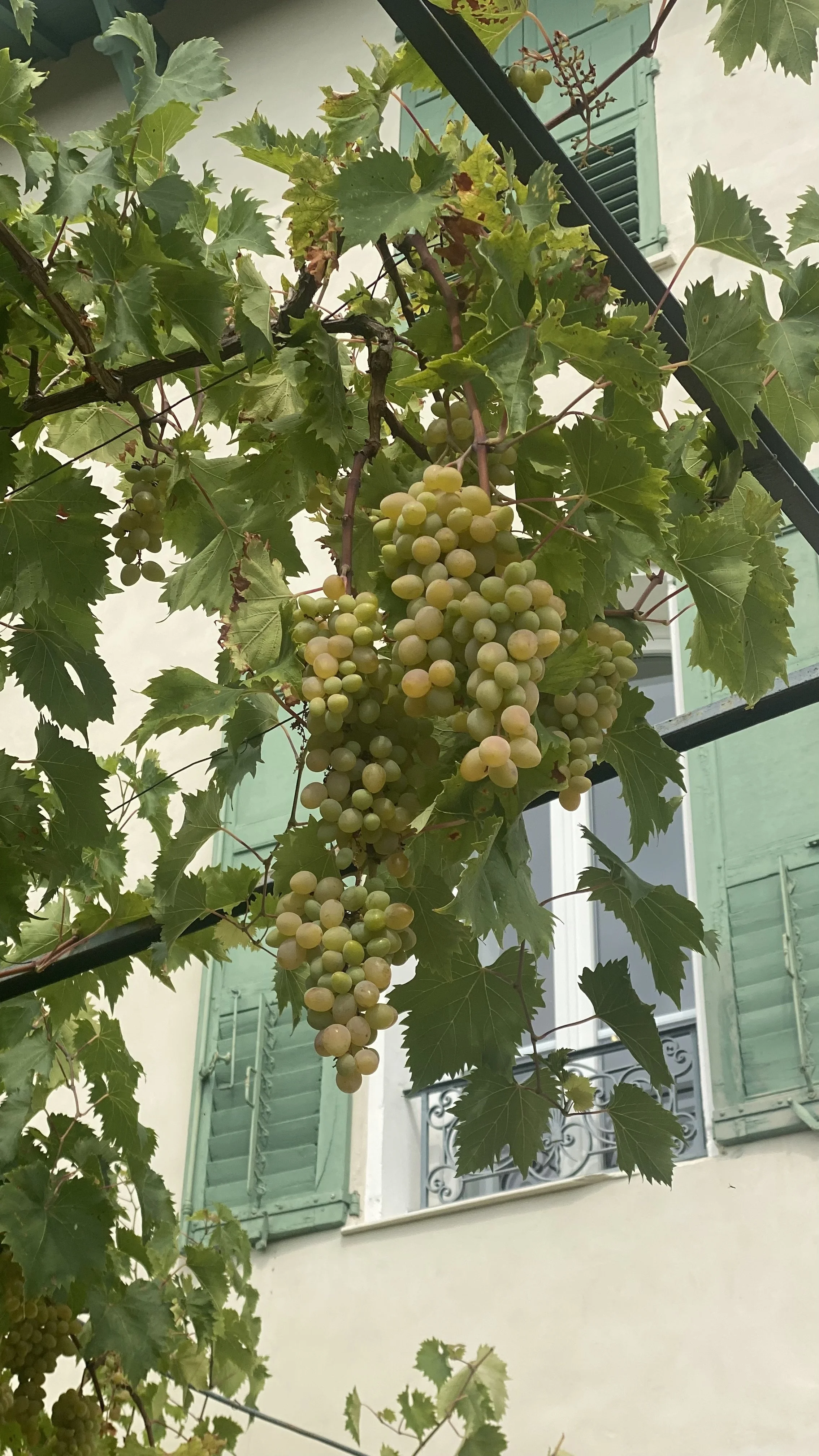
Crédit Photos : P. Borsarelli (except portraits of Matisse and Monique Bourgeois)